High-intensity spring rains push acetochlor off fields into waterways
Follow BMPs to keep herbicide where it’s needed
From Minnesota Department of Agriculture
Across Southern Minnesota, a concerning trend is emerging: acetochlor levels spike in many rivers and streams after heavy spring rains trigger runoff from freshly treated fields. These early-season surges occasionally push concentrations above the state’s chronic water-quality standard, putting both water quality and the long-term availability of acetochlor at risk.
Acetochlor is the active ingredient in widely used herbicides such as Tripleflex®, SureStart®, Resicore®, Warrant®, and Harness®.* It is a mainstay for controlling early-season weeds in corn, soybeans, and sugarbeets. For many operations, acetochlor is important to stay ahead of resistant weeds and protect yield potential.
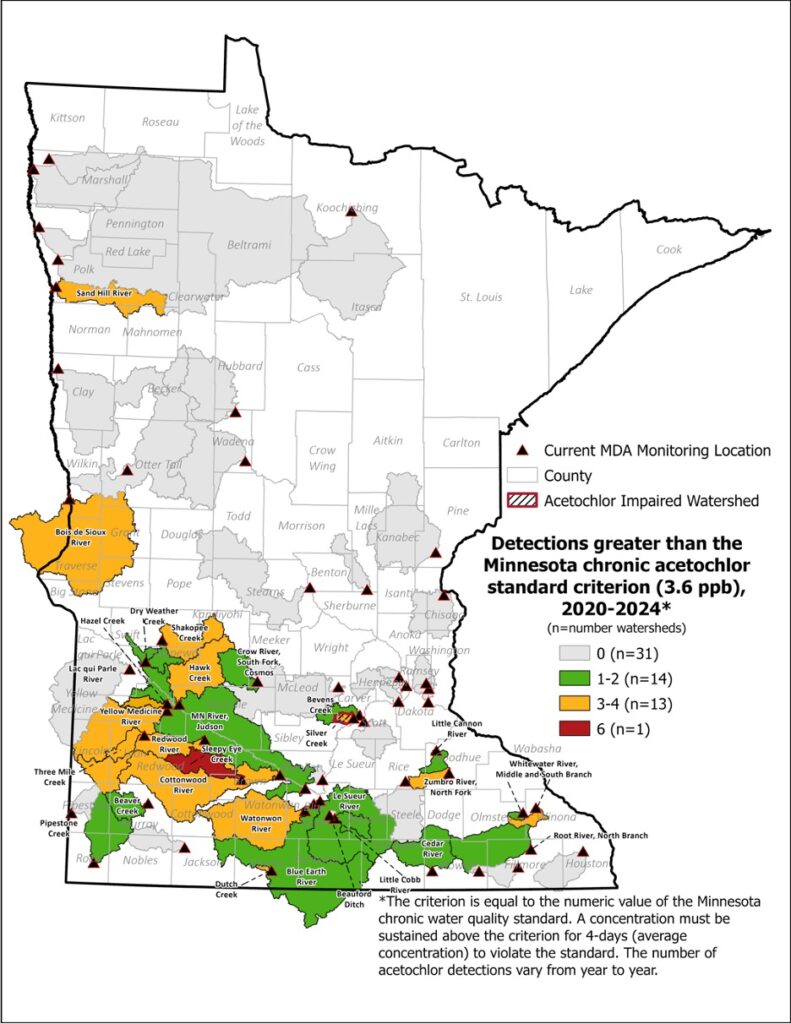
But when acetochlor moves off-field through runoff and into waterways at elevated concentrations, it can harm aquatic plants and animals, degrade stream and river ecosystems, and contribute to waterbody impairments. Those impairments can lead to restrictions on how—and whether—acetochlor can be used in the future, limiting a trusted weed-control tool many growers depend on. Currently, Silver Creek in Carver County is the only waterway in the state listed as an impaired for acetochlor.
The MDA’s pesticide monitoring results from 2020 – 2024 tell a consistent story: acetochlor levels are increasing across southern Minnesota, with many locations exceeding the 3.6 parts per billion chronic water-quality standards. Nearly all high detections occur in May and June, following rain events shortly after application. Later in the season, levels typically drop below concerning levels.
The good news is that herbicide management choices and practical adjustments during early spring (May–June) can make a meaningful difference. Reducing acetochlor use during high-runoff periods and adopting practices that limit surface runoff are key to keeping concentrations in waterways low.
Minnesota farmers have a long history of adapting to new information and changing conditions. As you plan for the 2026 season, the Minnesota Department of Agriculture (MDA) encourages reviewing your herbicide program with your agronomist or dealer and considering these acetochlor Best Management Practices (BMPs):
- Adjust timing. Consider using non-acetochlor herbicides early in the season when runoff risk is highest. Reserve acetochlor for early post-emergence applications when conditions are more stable. Be sure to follow label restrictions for crop growth stage or height
- Incorporate pre-plant acetochlor applications into the soil. If you usually apply acetochlor on the soil surface before crop emergence, switch to soil-incorporation before planting to reduce runoff.
- Watch the forecast. Avoid applying acetochlor if heavy rain is expected within 48 hours.
- Apply only what you need. Use the appropriate label rate for your soil type and consider premixes to reduce total acetochlor applied.
- Maintain vegetative buffers. Keep vegetative buffers along waterways, drainageways, and low areas where runoff collects before entering streams and rivers.
Each BMP adopted is a step toward cleaner water and more sustainable crop management. Spring rains are inevitable—we can’t control the weather, but we can control what we apply during the high-risk period and take steps to reduce runoff.
Minnesota agriculture depends on healthy soils, clean water, and the ability of farmers to adapt. By making thoughtful early-season decisions now, we can help keep acetochlor where it belongs—on fields, not in waterways.
For more information about acetochlor monitoring and BMPs, contact the MDA at ptu.mda@state.mn.us.
* Use of trade names is for educational purposes only. No endorsement is implied, and no discrimination is intended.